
Introduction
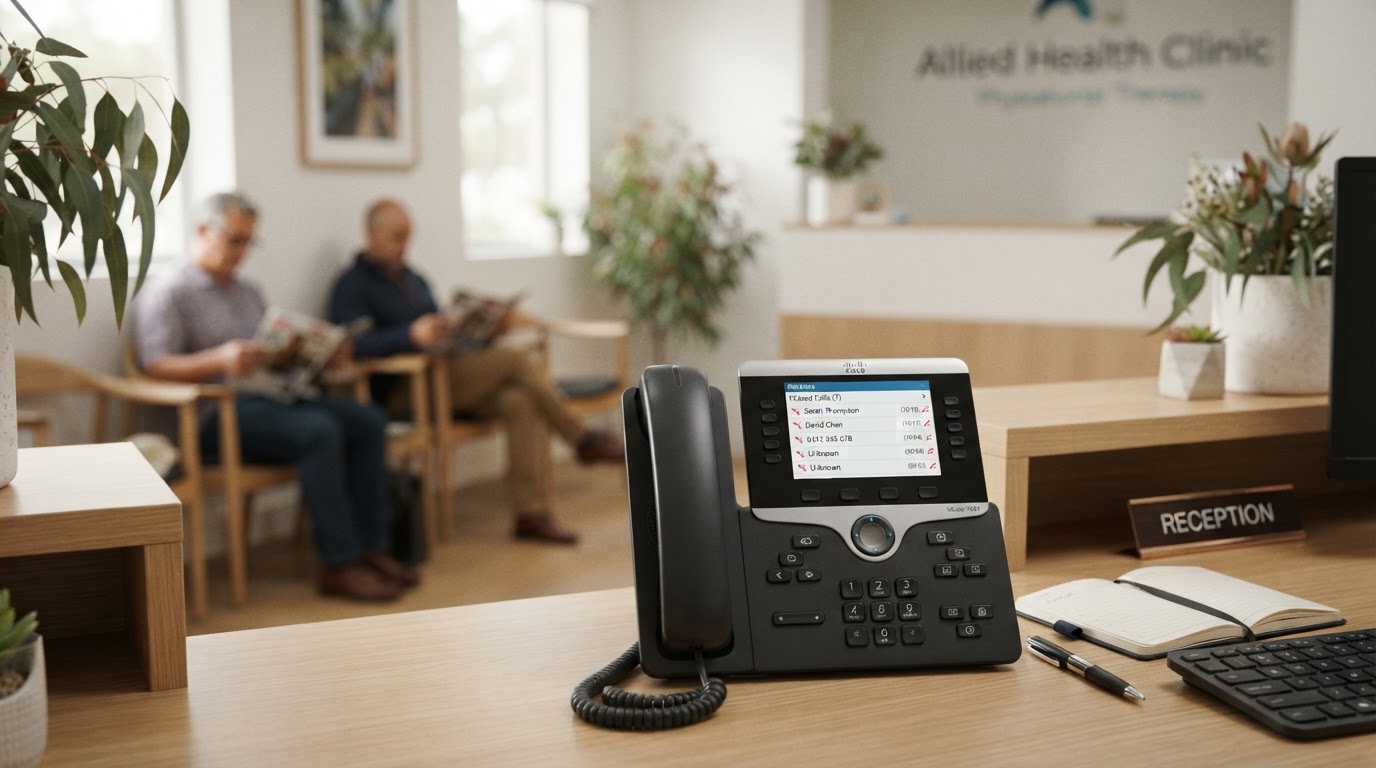
A practitioner is treating a patient. The receptionist is helping someone at the front desk. The phone rings. Nobody answers.
It is a scenario that plays out in allied health practices every day. The question practice owners often ask is: how many of those missed calls represent lost patients?
The honest answer is that there is no single universal percentage. Missed-call rates and conversion rates vary by practice size, profession, call volume, reception coverage, opening hours and patient demographics. But that does not mean the problem cannot be understood — or measured.
Why Allied Health Practices Miss Calls
Missed calls in allied health are rarely caused by negligence. They are usually the result of genuinely busy periods where staff cannot stop what they are doing to answer the phone.
- Practitioners are with patients and cannot interrupt a session
- Reception is checking in or checking out a patient
- Lunch breaks and staff handovers
- Staff shortages or unexpected demand
- Multiple incoming calls at the same time
- After-hours calls when the practice is closed
- Weekend enquiries when no one is available
Do Missed Calls Actually Mean Lost Patients?
Not every missed call becomes a lost patient. Some callers will leave a voicemail. Some will call back. Some will send an enquiry through your website. But every missed call represents an enquiry that requires follow-up — and not every caller is willing to wait.
The distinction matters because it changes how you think about the problem. The goal is not to assume every missed call is a lost patient. The goal is to make sure missed enquiries do not disappear.
If a new patient calls three practices and yours is the only one that does not answer, the caller may simply move on to the next option. Existing patients are more likely to call back, but new patients have no loyalty to your practice yet.
A Simple Way to Estimate the Cost of Missed Calls
Rather than relying on a universal statistic, it is more useful to estimate the potential cost for your own practice. Here is a simple illustrative calculation:
- Calls received per month: 200
- Calls missed per month: 20 (10%)
- Percentage of missed callers who may have booked: 50%
- Average initial appointment value: $130
- Estimated missed appointments per month: 10
- Estimated potential revenue missed per month: $1,300
- Estimated potential revenue missed per year: $15,600
Which Allied Health Practices Are Most Vulnerable?
Some practices are more exposed to the cost of missed calls than others:
- Solo practitioners who answer their own phones
- Small clinics with limited reception coverage
- High-demand practices with waitlists
- Multidisciplinary clinics with complex scheduling
- Clinics with limited opening hours
- Practices where practitioners handle their own bookings
What Patients Expect When They Call a Practice
Patients calling an allied health practice generally expect a quick response, clear information and an easy way to book an appointment. When they cannot reach the practice, their next step is often to try another provider.
This is particularly true for new patients. An existing patient may be willing to leave a message and wait for a callback, but a new patient who is comparing practices has little reason to wait.
How to Reduce Missed Calls in an Allied Health Practice
If you want to reduce the number of missed calls in your practice, start with measurement and then work through practical improvements:
- Track incoming calls and identify how many are missed
- Review peak periods to understand when calls are most likely to be missed
- Improve reception coverage during busy periods where possible
- Offer online enquiry options through your website
- Use a website chatbot to engage visitors outside business hours
- Implement missed call SMS so unanswered calls are followed up automatically
- Consider 24/7 AI call answering for after-hours and overflow coverage
Frequently Asked Questions
How many calls do allied health practices miss?
There is no single universal figure. Missed-call rates vary by practice size, profession, call volume, reception coverage and opening hours. The best approach is to track your own call data and measure your missed-call rate over time.
Do missed calls lead to lost patients?
Not every missed call becomes a lost patient, but every missed call represents an enquiry that requires follow-up. New patients are particularly likely to move on to another practice if they cannot reach you.
How can allied health practices reduce missed calls?
Practices can reduce missed calls by tracking call data, improving reception coverage during peak periods, offering online enquiry options, using a website chatbot, implementing missed call SMS and considering 24/7 AI call answering.
What is missed call text back?
Missed call text back is a feature that automatically sends an SMS after an unanswered call, giving the caller an immediate way to continue the conversation and helping ensure the enquiry is not lost.
Can AI answer allied health calls?
Yes. An AI receptionist can answer inbound calls 24/7, handle routine administrative enquiries, capture new patient details and help book appointments, working alongside your reception team.
Can missed-call SMS help recover enquiries?
Yes. An automated SMS gives missed callers an immediate alternative to leaving a voicemail, which can help recover enquiries that might otherwise be lost.
Related Articles
Hailey
Hailey AI — Australian AI Automation Team
Hailey is part of the Hailey AI team, helping Australian service businesses automate enquiries, bookings, and customer communication. With hands-on experience across trades, healthcare, and professional services, Hailey writes practical, no-fluff guides focused on real business outcomes.
Stop Losing Jobs to Missed Calls
Start your 7-day free trial today. No credit card, no lock-in contract. Includes your FREE AI website + AI Website Chatbot.